


Understanding the Fitzpatrick Scale: Why Skin Type Matters for Laser Treatments
When it comes to skincare or cosmetic treatments like laser hair removal, knowing your skin type isn't just helpful--it's essential. One of the most trusted ways providers understand skin tone and sun sensitivity is through something called the Fitzpatrick Scale. If you've ever wondered why some people tan while others burn, or why your provider asks about your sun habits before a treatment, the Fitzpatrick Scale is likely behind it. We'll break down what the Fitzpatrick Scale is, explain each of the six skin types, and share why knowing yours can make all the difference--especially if you're considering laser hair removal. We'll also show how LaserAway uses this tool, along with our advanced laser technology, to deliver safe, effective treatments for every skin tone.What Is the Fitzpatrick Scale?
The Fitzpatrick Scale is a skin classification system developed in the 1970s by Dr. Thomas Fitzpatrick. Originally used to assess how different skin tones react to UV exposure, it's now a go-to tool in both dermatology and aesthetic medicine. Why? Because it helps providers understand how your skin will respond to things like sun, heat, and light-based treatments--such as lasers. The scale sorts skin into six types, based on two main things:- Your natural skin tone
- How your skin reacts to sun exposure--whether it burns, tans, or both
The Six Fitzpatrick Skin Types
Each skin type has unique traits when it comes to sun sensitivity and pigmentation. Here's a quick breakdown:Type I - Very Fair Skin
- Typical look: Pale white skin, often with freckles; red or blonde hair; light-colored eyes
- Sun reaction: Always burns, never tans
- Skin behavior: Very sun-sensitive and prone to sun damage
Type II - Fair Skin
- Typical look: Fair skin, blue or green eyes, blonde or light brown hair
- Sun reaction: Burns easily, tans minimally
- Skin behavior: Still sun-sensitive, though slightly more resilient than Type I
Type III - Medium Skin
- Typical look: Beige or olive skin with hazel or brown eyes
- Sun reaction: Sometimes burns, gradually tans to a light brown
- Skin behavior: Moderately sun-sensitive
Type IV - Olive or Light Brown Skin
- Typical look: Light brown skin, dark hair and eyes
- Sun reaction: Rarely burns, tans easily
- Skin behavior: Lower risk of burning, but still needs sun protection
Type V - Brown Skin
- Typical look: Medium to dark brown skin, dark eyes and hair
- Sun reaction: Very rarely burns, tans deeply
- Skin behavior: Low sun sensitivity, but more prone to hyperpigmentation from treatments
Type VI - Deep Brown or Black Skin
- Typical look: Very dark brown to black skin with dark eyes and hair
- Sun reaction: Almost never burns
- Skin behavior: Least sensitive to sun, but most sensitive to pigmentation changes if not treated properly
Why Your Fitzpatrick Skin Type Matters
Knowing your Fitzpatrick skin type helps you understand more than just how your skin reacts to the sun--it plays a big role in how your skin responds to aesthetic treatments. This is especially important when it comes to laser hair removal, where safety and effectiveness depend heavily on matching the right laser to your skin tone. Laser hair removal works by targeting pigment in the hair follicle. But since your skin also contains pigment (melanin), there's a risk that lasers can affect the surrounding skin if not used properly--particularly for patients with deeper skin tones. That's where the Fitzpatrick Scale becomes so useful. It helps providers:- Choose the right laser wavelength
- Adjust laser settings for maximum safety
- Prevent unwanted side effects like burns or hyperpigmentation
- Deliver customized results for your skin
How LaserAway Uses the Fitzpatrick Scale for Safer Results
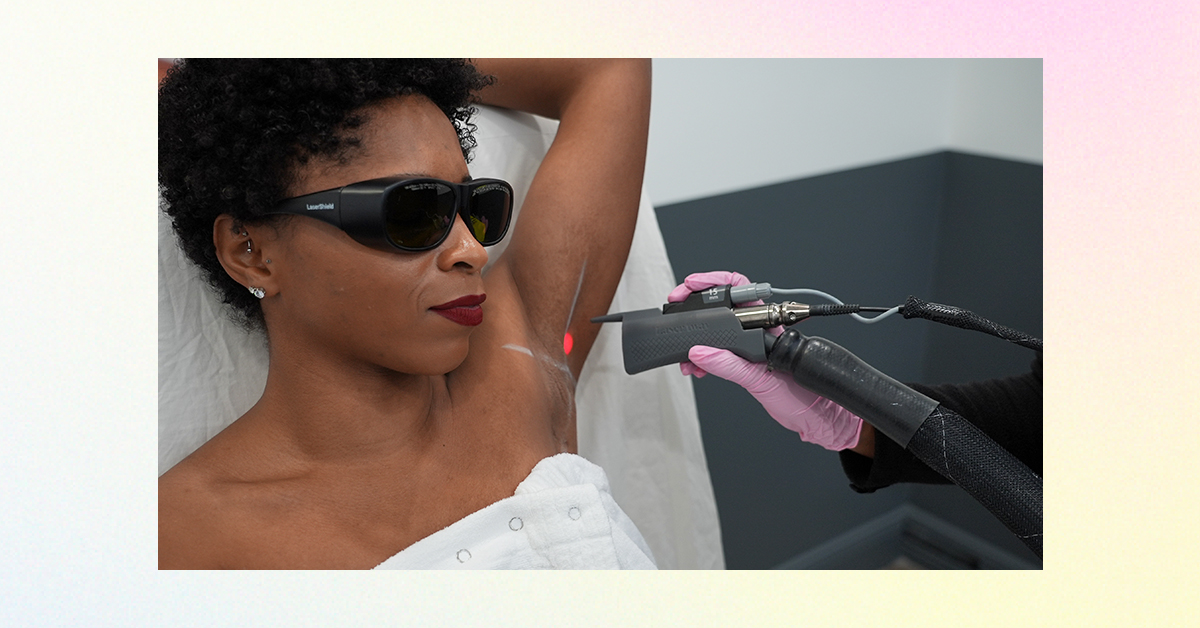
At LaserAway, we use the Fitzpatrick Scale every day to help guide treatment decisions. Whether you're light-skinned and prone to burns or have a rich, deep skin tone that tans easily, our approach ensures your treatment is safe, comfortable, and effective. All our clinics are equipped with the Cynosure Apogee Elite, one of the most advanced dual-wavelength laser systems in the industry. Here's how it works:Two Wavelengths. One Customized Treatment.
- Alexandrite (755 nm) - Best for lighter skin tones (Types I-III), especially with finer or lighter hair
- Nd:YAG (1064 nm) - Safe for all skin tones (Types I-VI), especially ideal for medium to dark skin tones
Even Smarter Safety with the LaserSafe Solution
We've added an extra layer of protection to every treatment with the LaserSafe Solution--a powerful combination of Cynosure's advanced software and the expertise of our trained medical team. Here's how it works to keep your treatment safe and precise:- Automatically defaults to Nd:YAG, the safest setting for all skin tones, every time the device starts or goes idle
- Requires manual activation of Alexandrite, ensuring it's only used when clinically appropriate for lighter skin tones
- Resets to Nd:YAG if the device is paused, the handpiece is changed, or it enters standby mode